Single channel video, 4 minutes 40 seconds
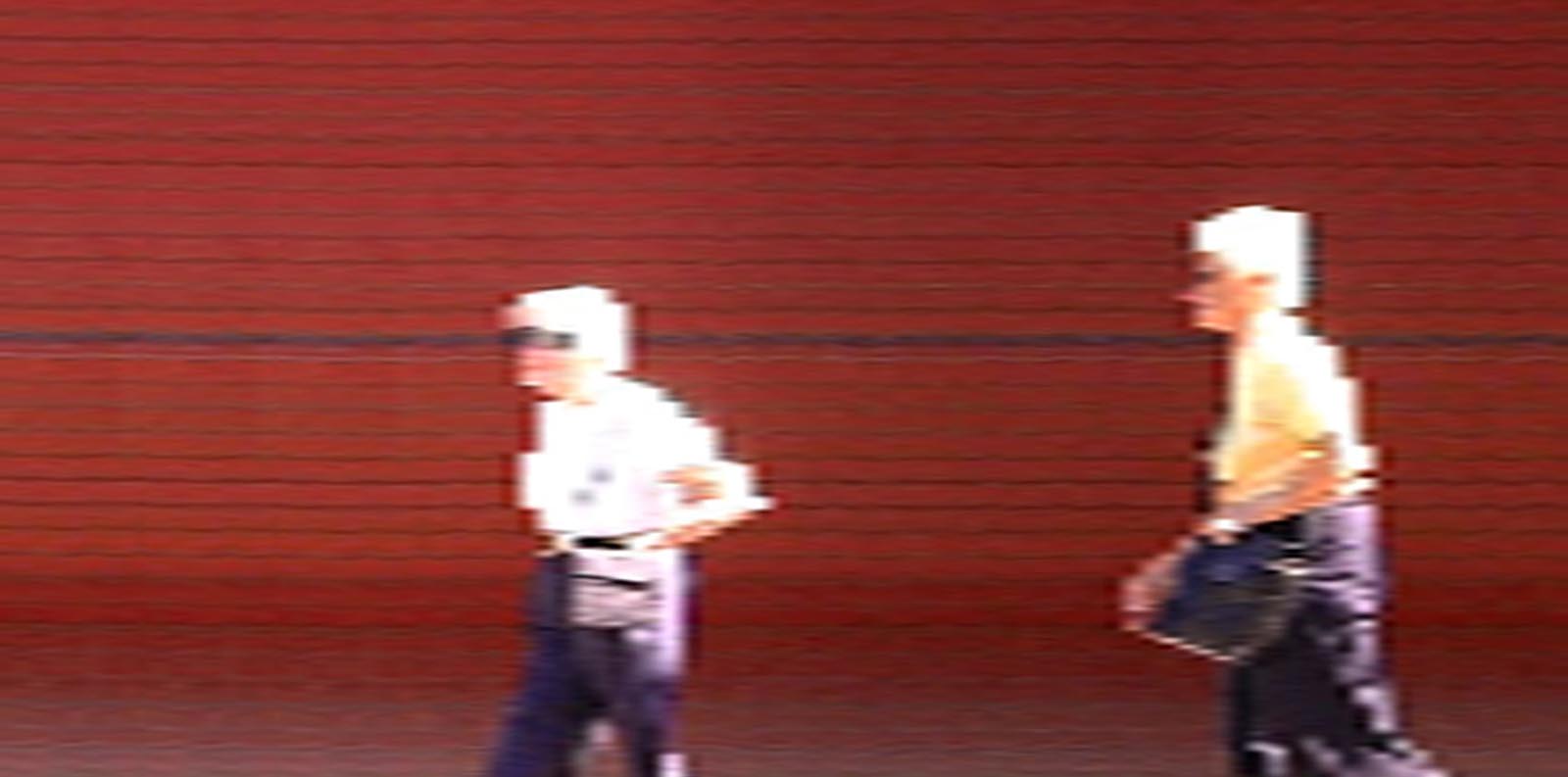
Dundas Square is the second in the Pulse Crowds series. Pulse Crowds are representations of urban spaces in which the movement of people and vehicles is influenced by an external mechanized event. These events produce an undulating effect on the spaces' inhabitants: activity in the space shifts from static to active in a repetitive rhythm, highlighting both the archetypes and the outliers of pedestrian and vehicular movement.
In Dundas Square, traffic and pedestrians navigate an intersection while obeying (or disobeying) traffic signals.
Excerpt from Pulse Crowds (Dundas Square)
Photographic Series, 24"x36"
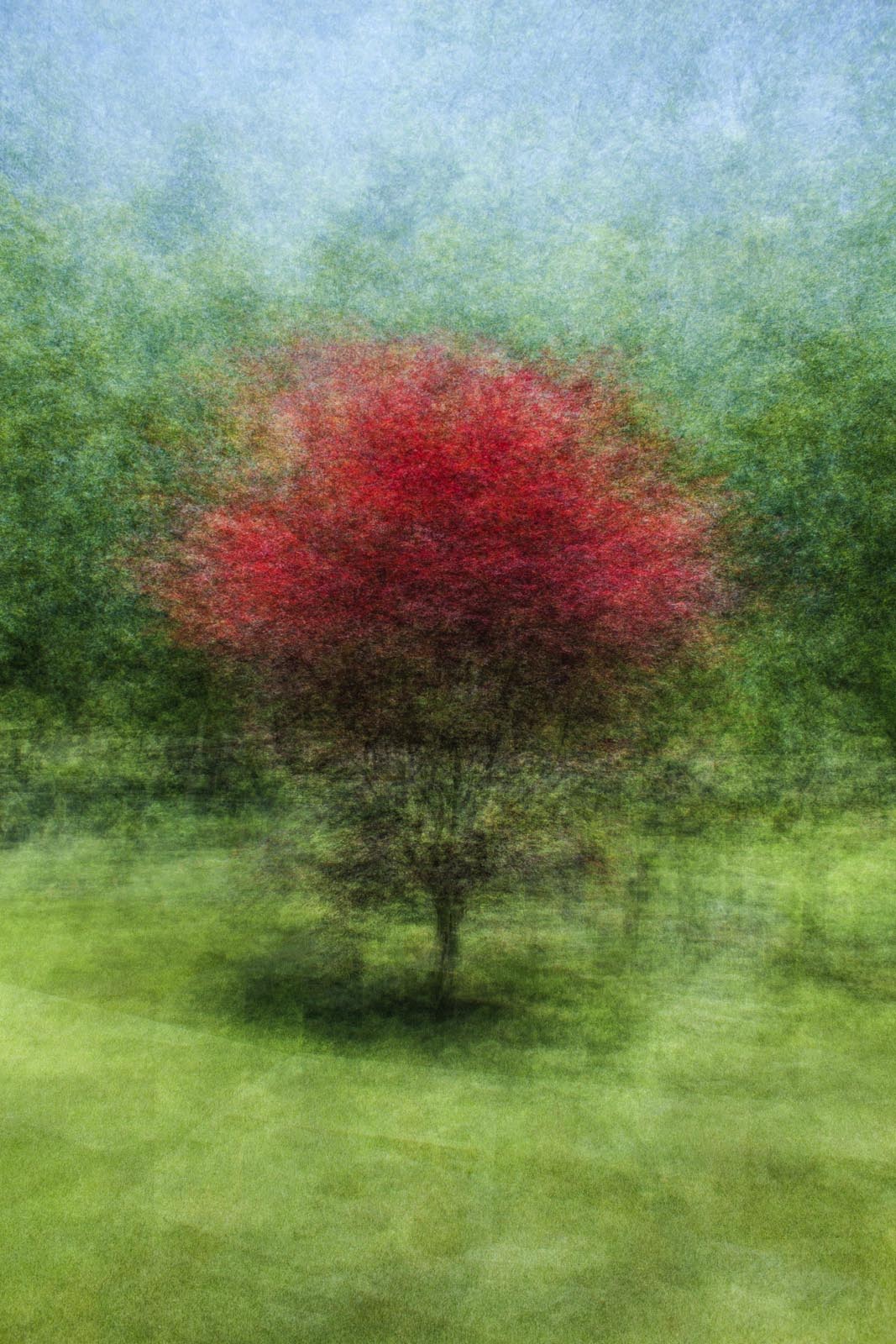
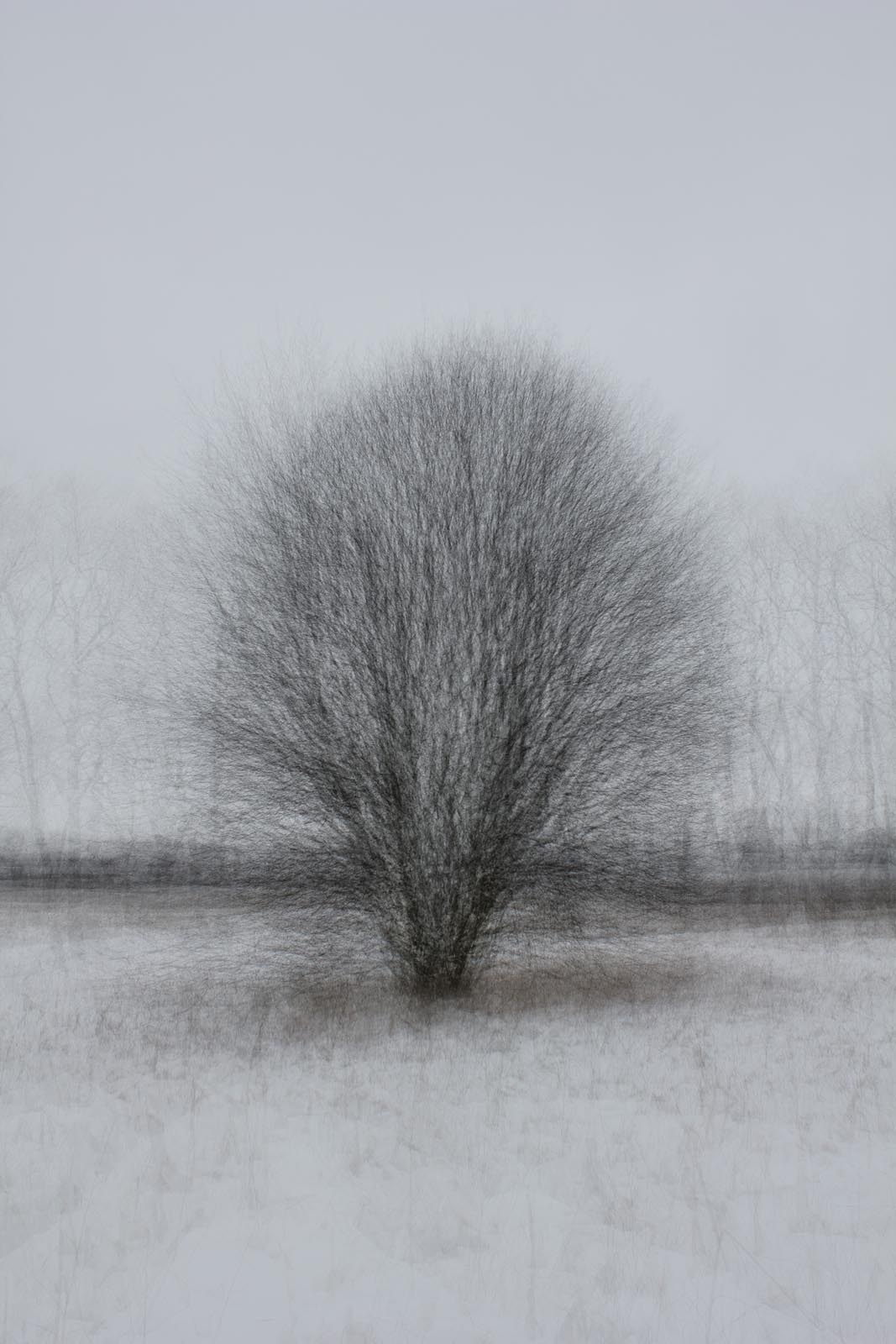
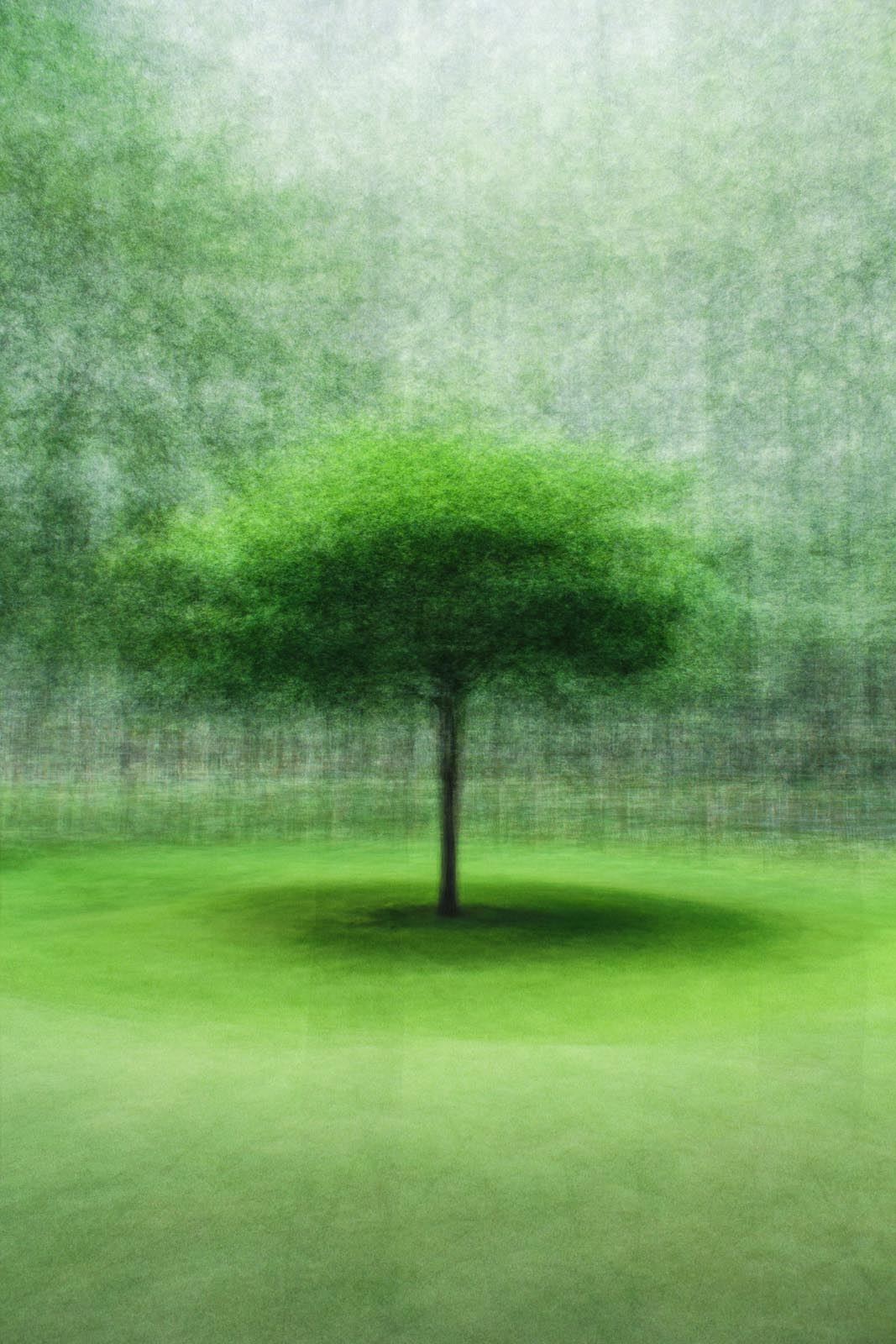
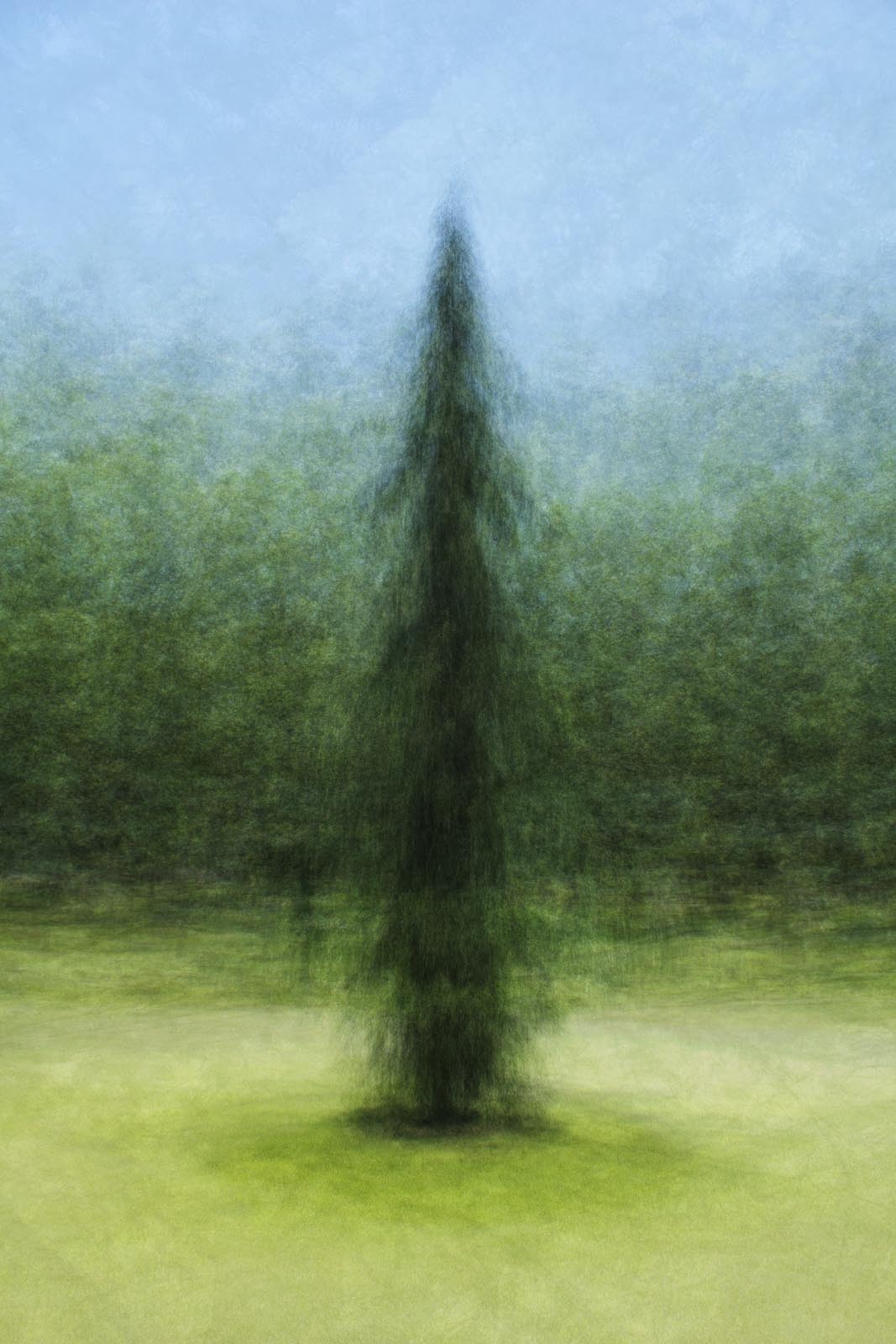
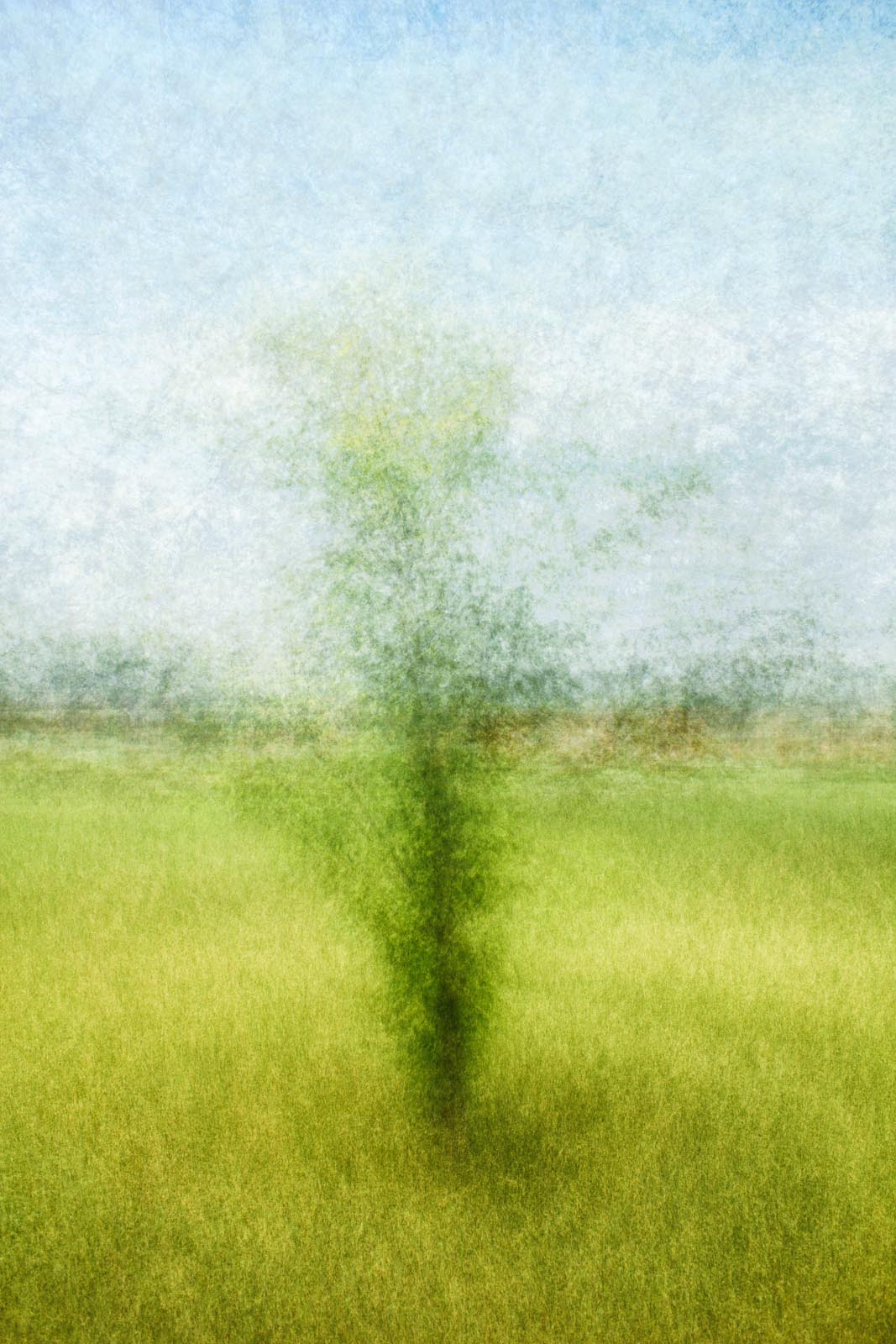
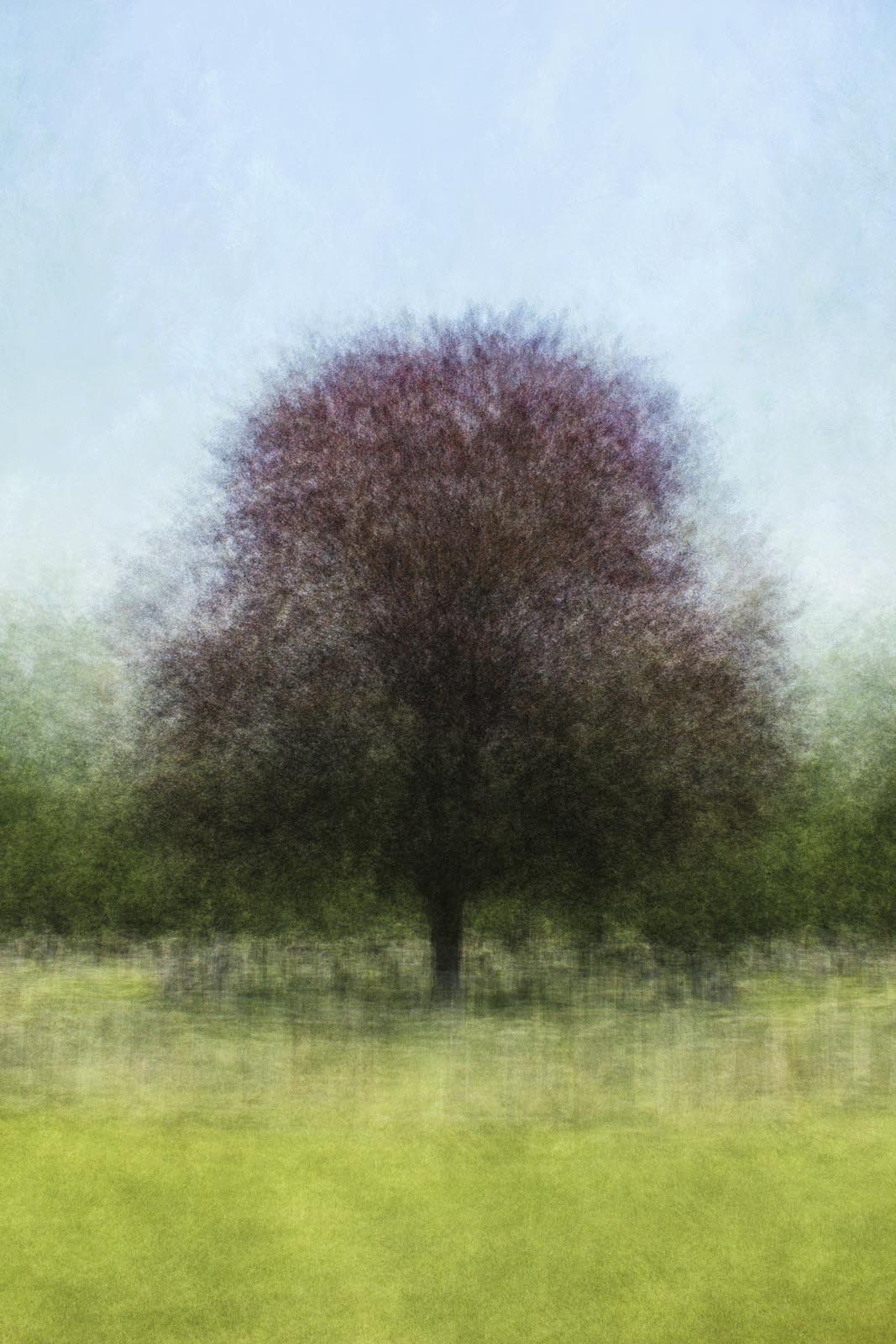
A “primary” is the object around which a satellite orbits. In this series, the photographer acts as satellite while individual trees act as primaries. The portraits that result reveal the essence of a particular tree by rendering it from multiple vantage points simultaneously.
Forsythia (2013)
Japanese Maple (2012)
Basswood (2013)
Japanese Maple No. 2 (2012)
English Oak (2012)
Magnolia (2013)
Weeping Nootka Cyprus (2012)
Flowering Dogwood (2013)
Sapling (2012)
Copper Beech (2012)
Tulip Poplar (2013)
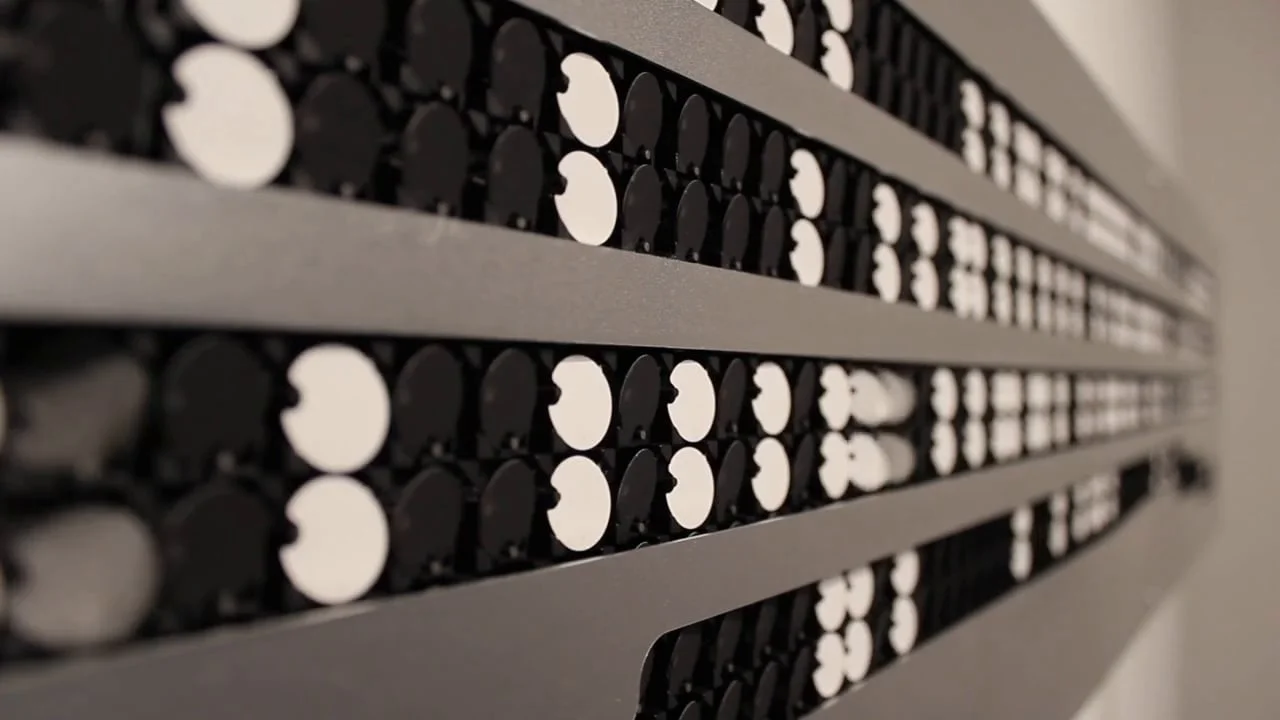
Kinetic installation: Electromagnetic flip-disc display, 54” x 11.5” x 4”, 4 minutes, looped
Cadence is an electro-magnetic flip-disc display that chronicles vehicular activity on a one-kilometre stretch of highway during rush hour.
Each vehicle’s headlights are portrayed by two white discs. The fast lane is positioned at the top of the display, below which are the middle lane and slow lane. The curved lane that ascends at bottom left represents the entry ramp, while the exit ramp on the lower right carries traffic off of the highway. The sinusoidal wave generated by the emergent traffic patterns can be seen in the compression and expansion of the vehicles as they travel.
If you view Cadence from the side—perpendicular to the piece—you can see the flutter of hundreds of discs as they carry information across the display. The sound generated by the piece is derived from the subtle clapping of the discs against the display as each circle rotates from one position to another.
Photographic Series, 24"x96". Tori Foster & Jesse Colin Jackson
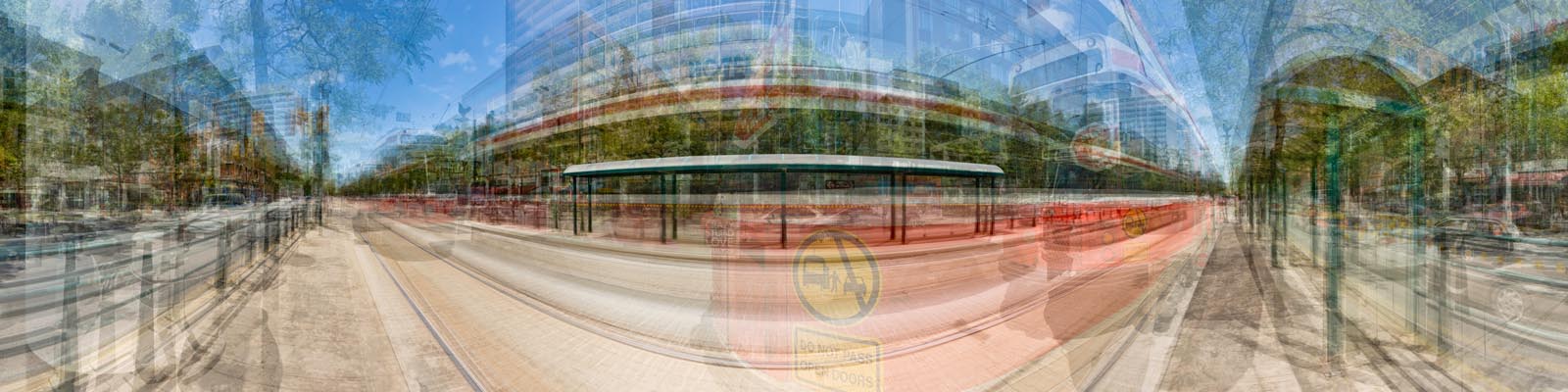
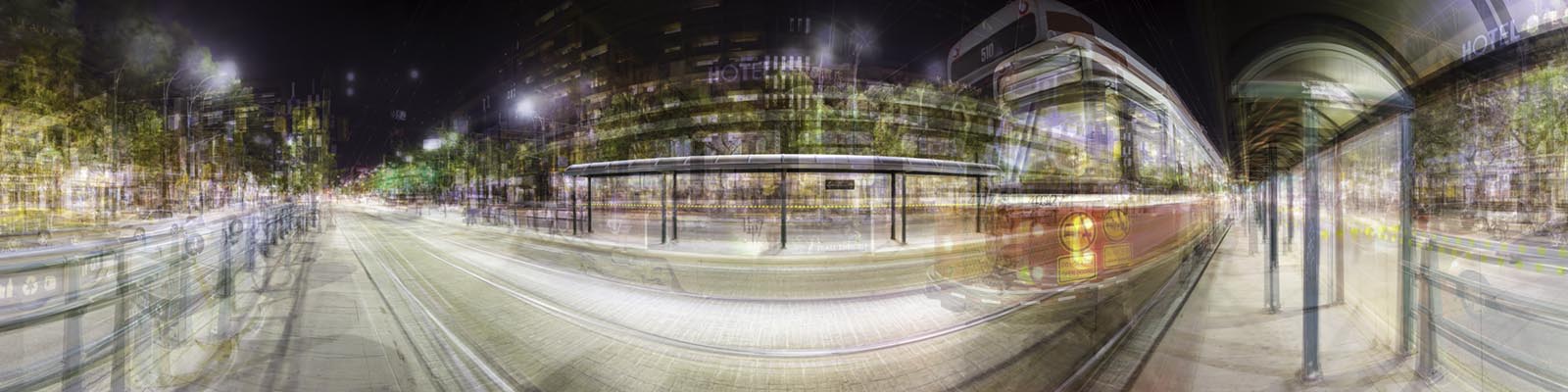
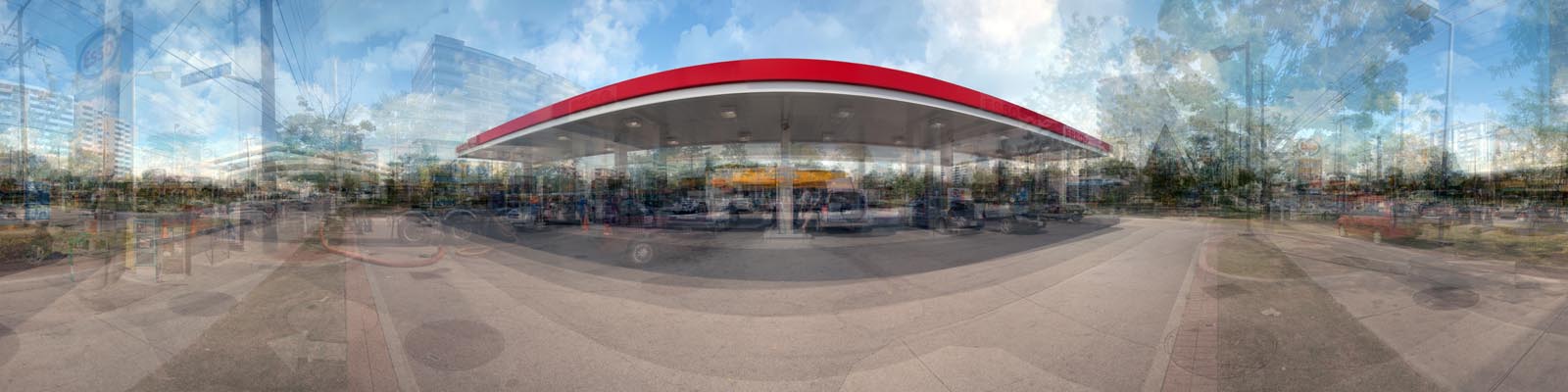
Iterations is a series of 96” x 24” panoramas of familiar built forms and their surrounding environments (including branded structures, street furniture, and suburban housing). Each panorama is comprised of seven or more photographs that are composited through transparency overlay. Thus, for example, Seven Essos, Toronto, consists of seven different Esso gas stations from around the city of Toronto superimposed on one another, creating a juxtaposition of the common and unique characteristics of each panoramic scene. Consistent elements reinforce each other through repetition such as the bright red canopy over the pumps, while inconsistencies, such as the surrounding environment or placement of columns, appear more ghost-like. The archetype of each architectural form emerges as a result of this accumulation of formal information.
Eight Streetcar Shelters (Day), Spadina Avenue (2011)
Detail
Eight Streetcar Shelters (Night), Spadina Avenue (2013)
Detail
Seven Essos, Toronto (2009)
Detail
Nine Beer Stores, Southern Ontario (2010)
Detail
Eleven Home Depots, Southern Ontario (2010)
Detail
Eight Best Buys, Southern Ontario (2010)
Detail
5-Channel HD video installation, 233-minutes, looped, variable size (40 feet x 4.5 feet, up to 222 feet x 25 feet)
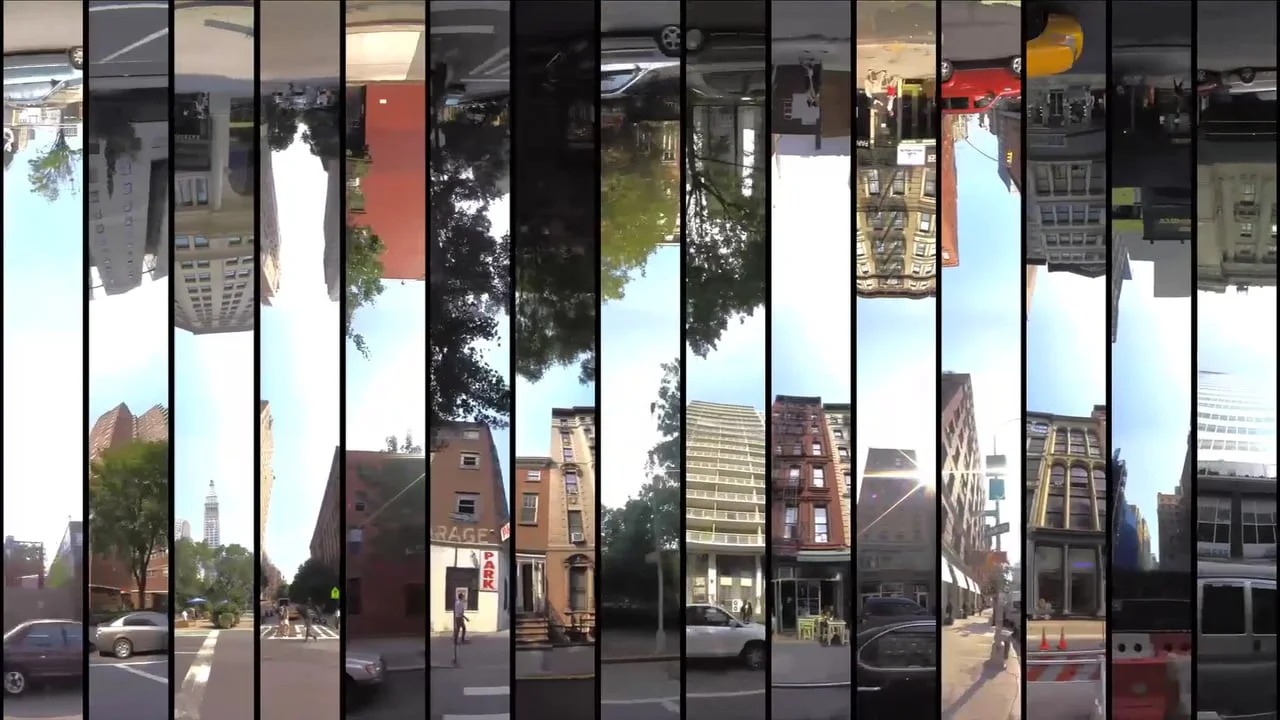
How does our bodily experience of place influence our conceptualization of space? In an attempt to tie together the experience of the specific with an understanding of the whole, in Continuous New York the city is presented in the capacity of both place and space. Place is shown in a vertical panoramic window that depicts a rainbow-like arc cast over the streetscape. The dizzying affect of the skyscrapers is captured in a complete 180-degree depiction of place. This panorama is juxtaposed with 74 others, each depicting a space 200 metres away from its neighbour. The numerous windows placed side-by-side form a continuous and unbroken loop through the island of Manhattan. The space of New York as a whole can be witnessed in its entirety while maintaining connection with the experience of individual place(s). The collapse of place and space exposes both the unabbreviated physical form and the intimate living details of the metropolis.
Installation view at Esplanade Arts & Heritage Centre, Medicine Hat, Alberta, Canada
Installation view at Pari Nadimi Gallery, Toronto, Canada
Installation view at InterAccess, Toronto, Canada
Video series: HD single channel video, variable durations
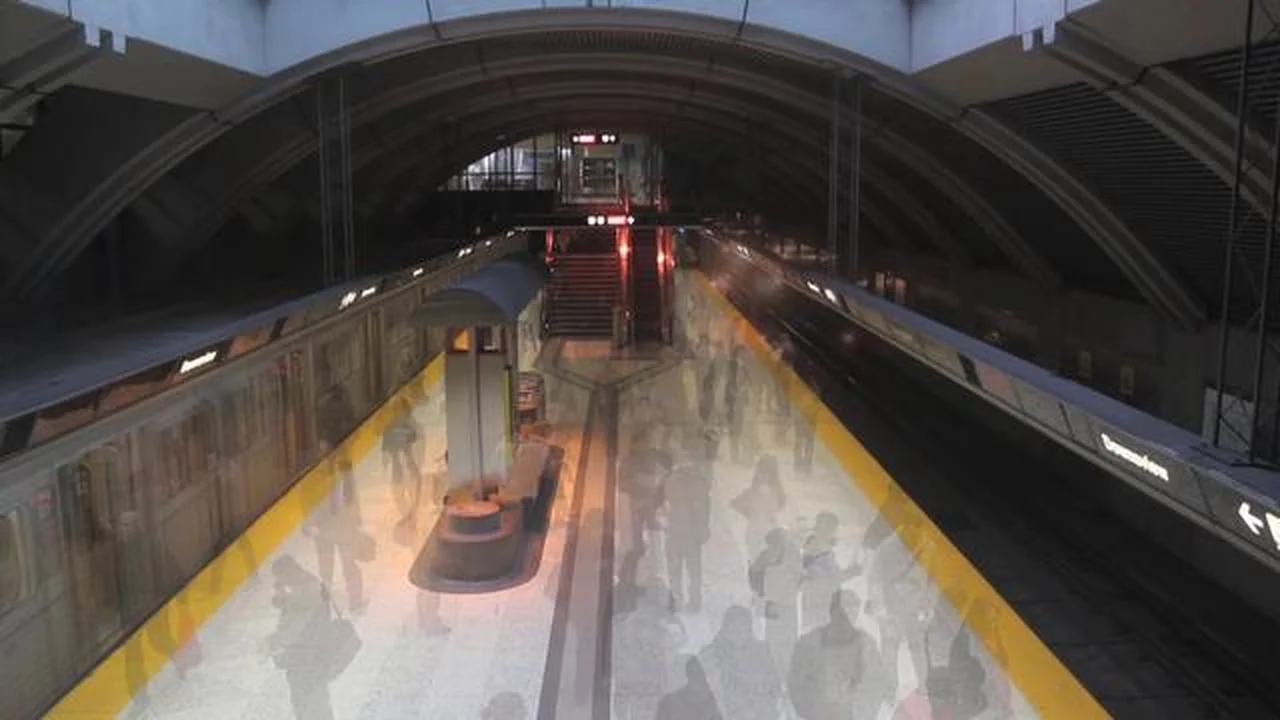
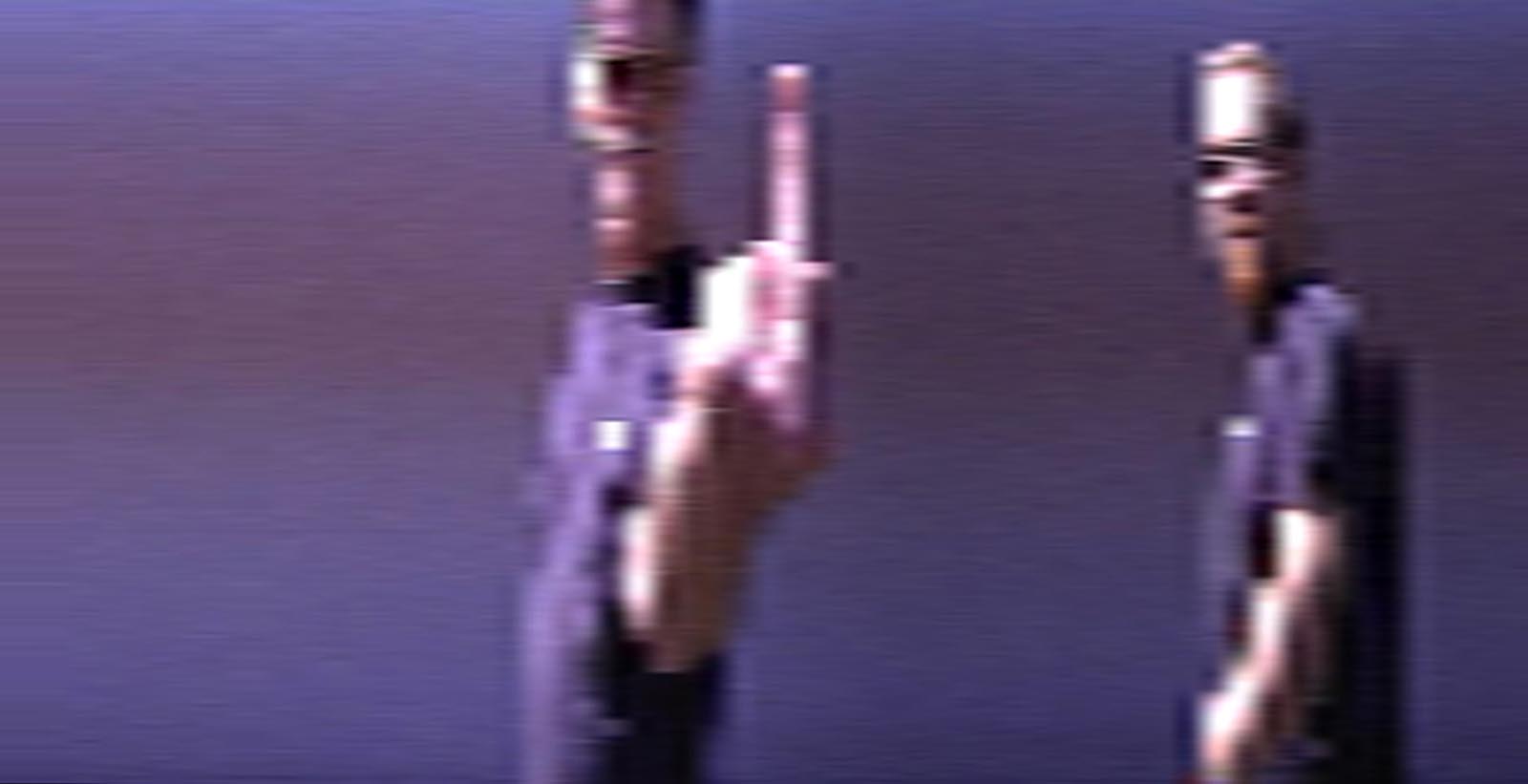
Downsview Station is the first in the Pulse Crowds series. Pulse Crowds are representations of urban spaces in which the movement of people and vehicles is influenced by an external mechanized event. These events produce an undulating effect on the spaces' inhabitants: activity in the space shifts from static to active in a repetitive rhythm, highlighting both the archetypes and the outliers of pedestrian and vehicular movement.
In Downsview Station the emergent behaviour of pedestrian crowds is orchestrated around a single registration mark: the chimes that signal the opening of the trains' doors.
Excerpt from Pulse Crowds (Downsview Station)
Video installation: Mixed media, 53” x 36” x 6”, 162 minutes, looped
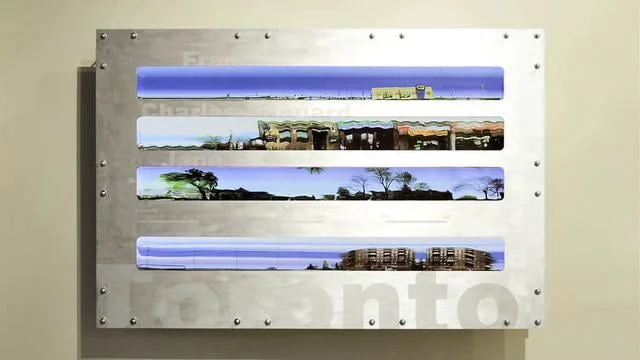
The Impossibility of Understanding in the Path of a Torontonian, is a video installation consisting of four horizontally stacked video streams. The top three streams each depict the movement path of a different individual, each of whom live in separate regions of the city. Each stream re-presents one full day of movement through the city. Simultaneously, the fourth and bottom video stream displays a streetscape of the entirety of Toronto—from one edge of the metropolis to the other. As the camera cuts through the city, this streetscape depicts buildings, parks, bridges, cars, and pedestrians—all of the actors in the urban environment. The juxtaposition of these four streams of video offers both an opportunity to witness the ways in which individuals experience the city and to witness the city as a whole from one side to the other.
Consisting of highly composited imagery, in which each stream is comprised of billions of stills, the piece merges video representation into a stills representation. Achieved through the design and implementation of custom Processing software, this produces the uncanny effect of buildings coming to life and then forced motionless into the passing of time, and lively pedestrians unwittingly paralyzed and rendered frozen in space.
Installation view, Toronto Image Works Gallery, 2009
Photographic composite series: variable dimensions
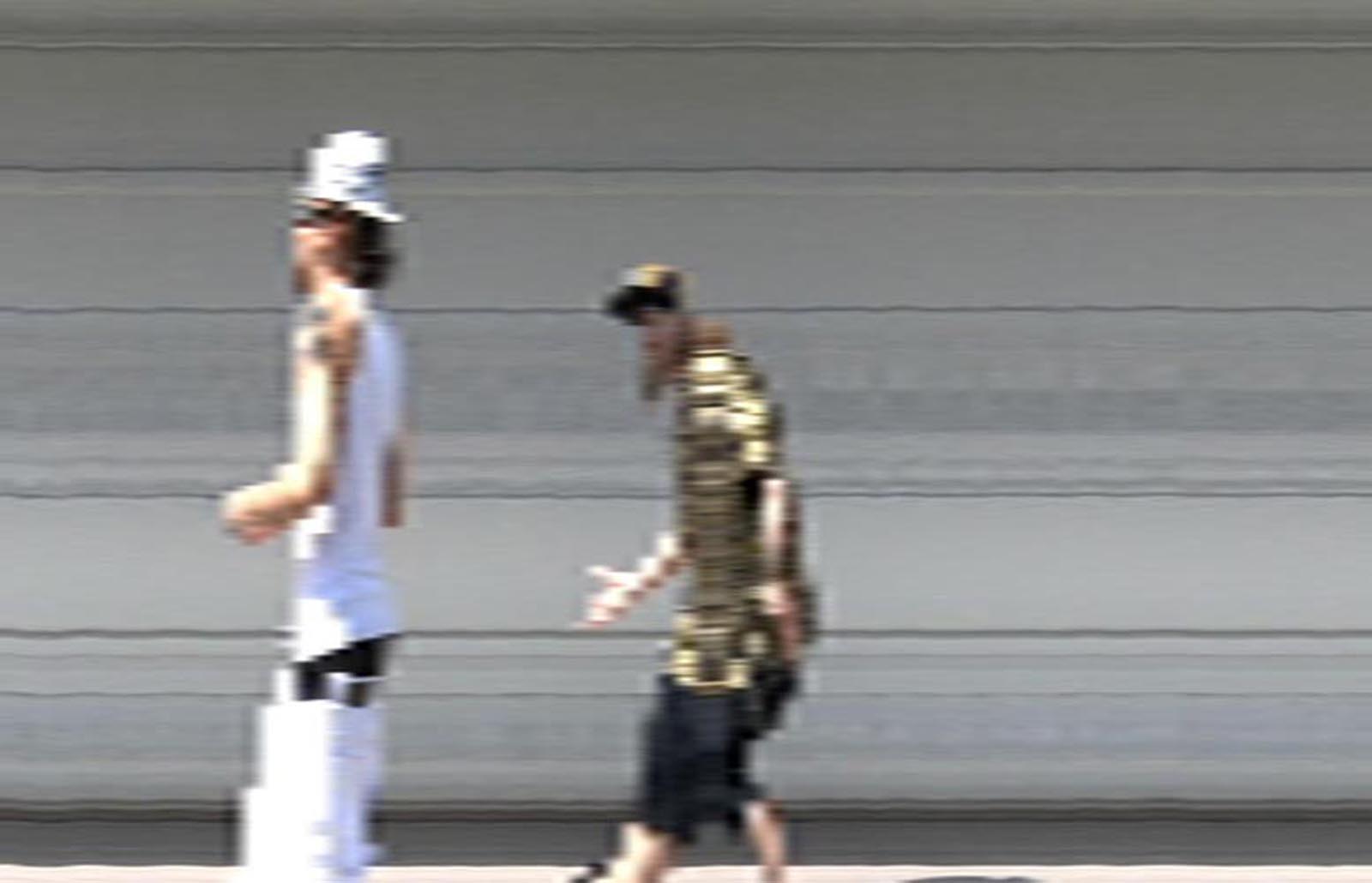
Unlike traditional photographs, which capture the three-dimensional volume of space in front of the camera lens, Movement Portraits are slit-scan images, which capture only action that crosses a two-dimensional plane of space. As a result, time in each of the Movement Portraits is represented from the left to right. Static elements are repeated in thin vertical slivers causing a horizontal streaking affect. Moving elements, such as pedestrians, are rendered as recognizable figures. The figures appear distorted because we are accustomed to seeing the world in three-dimensions, though they are ultimately an equally accurate representation of space and time. In this series I am privileging time over space as I explore the ways in which we navigate our environment. This shift in representational hierarchy allows us to consider how time impacts engagement patterns within the spaces we navigate.
Detail
Shoppers (Yellow), 6”x52.5” (2011)
Swimmer, 6”x50” (2011)
Dog Park, 6”x48” (2011)
Skate Park, 6”x42.5” (2011)
Pedestrian (Green), 6”x59” (2011)
Pigeons in Leisure, 6”x50.5” (2011)
Couple No. 1, 3”x6” (2007)
Couple No. 2, 3”x6” (2007)
Couple No. 3, 3”x4.5” (2007)
Installation: 4,700 Map pins, 156" x 48"
One Kilometre, Two Minutes illustrates the emergent behaviour of moving vehicles on a kilometre-long stretch of highway over the course of two minutes. Time-lapse aerial captures that depict the fast lane of a multi-lane highway are taken every two seconds. These time-lapse captures are then placed side by side, centimetres apart, illustrating the flow pattern of complex multi-vehicular movement through a narrow corridor of space. The curved form of the highway is articulated only by the repetition of taillights and brake lights. These lights are represented by pearl-head map pins fastened directly to the gallery walls (smaller pins represent tail lights, while larger pins represent brake lights).
Moments of congestion are articulated by clusters of brake lights, while free-flowing traffic is represented by running lights distantly spaced from one another. Through the representation individual driving habits emerge: a large gap between the same two cars over the captured two minute duration appears as a wide river-like swath of negative space that stretches to the upper left corner; tailgaters clustered together create dense red ribbons of congestion; antsy lane changes cause other drivers to brake and relinquish hard earned territory.
Detail of installation view, WARC Gallery, 2011